
Your officers are spending 2–3 hours on paperwork for every impairment stop. Evidex cuts that to 30 minutes.
Evidex guides officers through every test, captures evidence in real time, and auto-populates the report — so your agency spends less time on paperwork and more time keeping roads safe.




Built by law enforcement, for law enforcement
-
Easy to use
Modern data entry techniques focused on user experience for both new and seasoned officers
-
Hard evidence
Data entry is time stamped, geo-tagged and supported with an audit trail
-
Detailed insights
The data provides a platform for insights which can be viewed through a reporting dashboard
-
Accurate data
Leverages muscle memory during data capture so that the officer can keep their eyes on the suspect


Why pen-and-paper FSTs are costing your agency — every shift
Select your role to see what this means for you.
One missed clue can tank the case
When you're running a SFST roadside at 2 a.m., it's easy to miss a checkbox or notation. That gap shows up months later when defense counsel gets the report.
Hours of overtime on paperwork
Reconstructing a full impairment stop from notes means 2–3 hours back at the station — often on overtime. That's time you're not on the road.
No two reports look the same
Every officer has their own shorthand. Inconsistent documentation creates vulnerabilities that defense attorneys know exactly how to exploit.
Eyes on paper, not on the suspect
Manual scoring means looking down at a clipboard during the test. You miss behavioral cues — and the record may not reflect what actually happened.
No visibility until reports are filed
You find out about impairment stop activity days later — and only if reports get filed. Real-time activity data simply doesn't exist with pen and paper.
Overtime you can't justify or predict
Lengthy post-shift paperwork quietly drives overtime costs. Without data, it's nearly impossible to tie those hours to specific stops or officers.
Inconsistency creates liability
When different officers document the same test differently, it signals a training gap to the courts — and to your brass. Standardization isn't just about quality; it's risk management.
Budget reporting relies on guesswork
Justifying headcount and enforcement resources for DUI operations requires data you don't have. You're estimating — and leadership knows it.
Impairment enforcement costs are a black box
You're spending on DUI enforcement, but you can't show the board where the money goes, how efficient operations are, or whether overtime is warranted.
Acquittals from documentation failures
Charges get withdrawn when reports are incomplete or inconsistent. Each acquittal is hours of officer time — and community trust — down the drain.
Can't target resources by data
Without geo-tagged, timestamped stop data, enforcement is reactive. You're deploying resources based on intuition rather than patterns.
Training gaps are invisible until court
The first sign a new officer isn't testing correctly often surfaces during a criminal trial — far too late for corrective coaching or retraining.
Real-time data from the roadside to the boardroom
One app closes the loop from field stop to insights dashboard.
Guided testing — no step gets missed
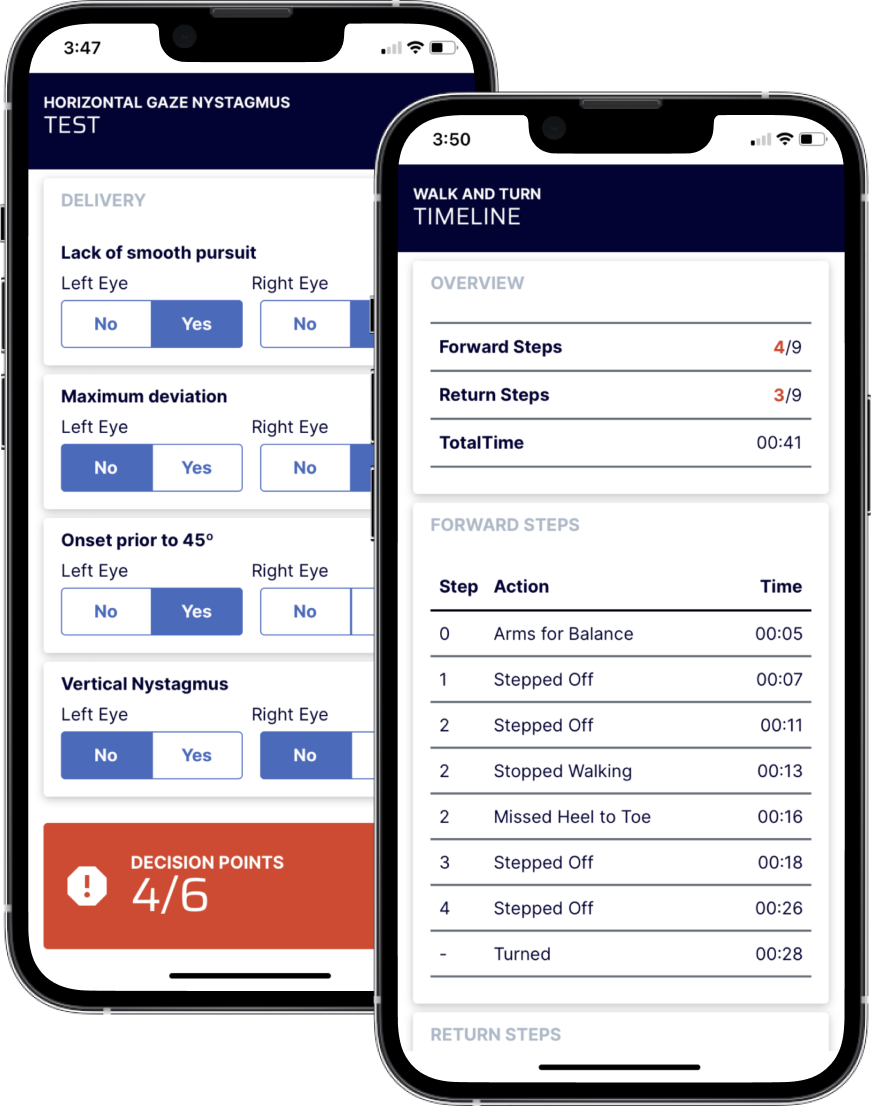
The app walks the officer through each SFST in sequence. Every observation is captured at the moment it happens — muscle-memory input keeps eyes on the subject, not a clipboard.
Report auto-populates — officers review, not rewrite
When the stop ends, the structured report is already built. Officers review and submit instead of spending 2 hours reconstructing events from memory. Fewer missed shifts, less overtime.
Live dashboard for supervisors and command
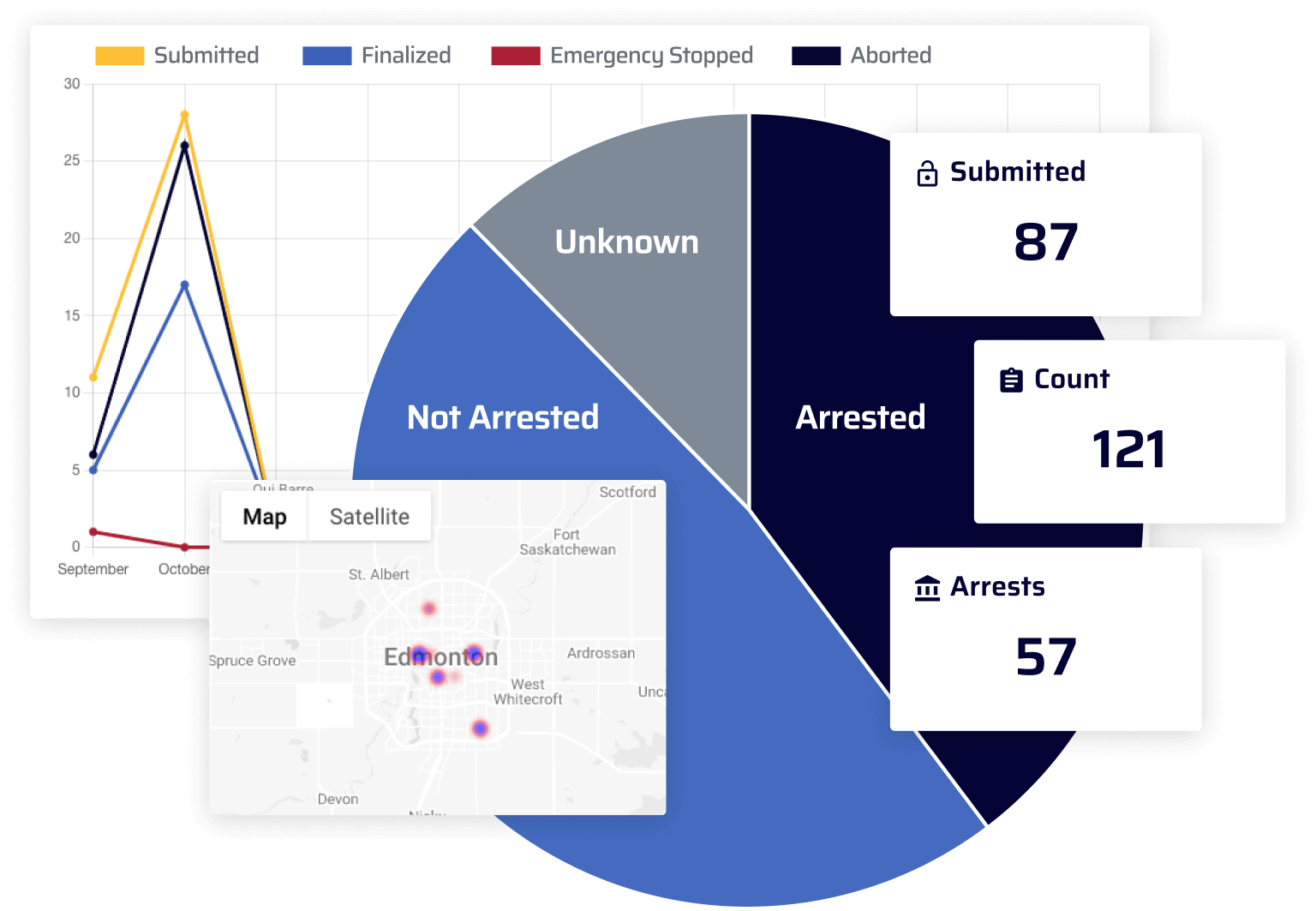
Real-time stop counts, arrest rates, geographic distribution, and officer-level data — available the moment a stop closes. Finally see where your DUI enforcement budget is actually going.
Audit-ready evidence, every time
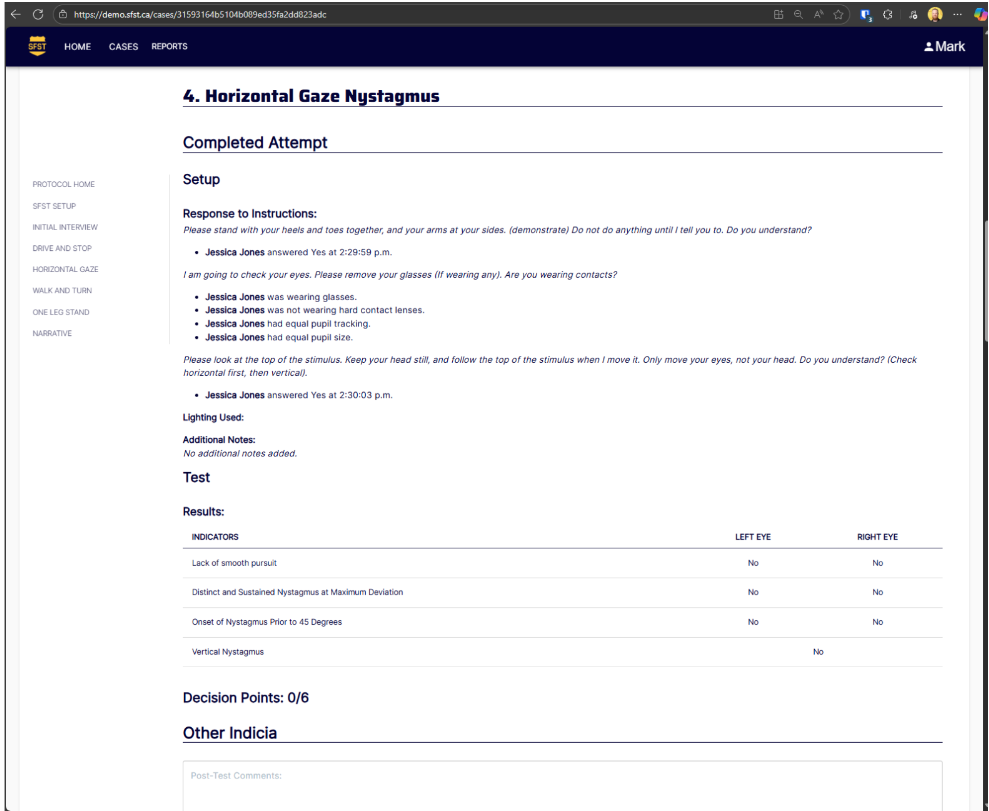
Timestamps, GPS co-ordinates, and a complete audit trail are attached to every stop — so defense challenges based on documentation gaps become much harder to mount.
Built for every level of your agency
Click a role to see what Evidex delivers for them.
Field officer
Administers FSTs
Traffic sergeant
Manages operations
Chief of police
Accountable for budget
For field officers — spend 30 minutes on paperwork, not 3 hours
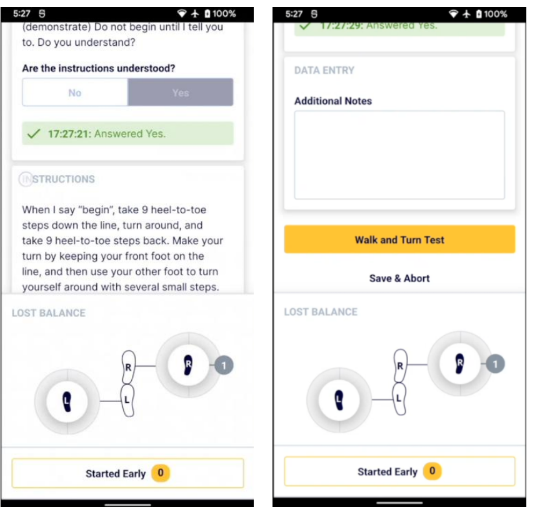
The Evidex app is simple and intuitive so your officers can focus on testing the subject
The app guides the officer through the testing process, capturing exact time and location data. The real-time data from testing the subject is recorded and presented to the officer, aiding them to make quick, informed, and accurate decisions.
- Guided process
- Colorized decision points
- Real-time reporting
 Guided process
Detailed insights at your fingertips
The paired Evidex web application provides better insight and transparency into policing efforts. Get insight into test counts, arrests, and uncompleted files, as well as geo-referenced and officer data which allows jurisdictional reporting.
How it works
-
01
Field
Officer conducts an FST using the smartphone app
Guided prompts walk the officer through every clue, capturing time-stamped, geo-tagged data at the roadside.
-
02
Office
Officer accesses case via web portal to review pre-populated report
Reports are auto-generated from roadside data and formatted to match traditional paper records — ready for submission.
-
03
Analytics
Decision makers access a dashboard to profile statistics within a jurisdiction
Command staff gain real-time visibility into test volumes, arrest rates, and officer-level performance across the jurisdiction.
Reed Holland Police ConstableThis truly touches on the standardization and removes the potential for errors. The solution saves us time and ensures consistency independent of officer experience.
Meet Our Customers
Traffic stops change for the better using our SFST mobile solution. Field officers can more consistently and easily evaluate subjects. Supervisors and Data Analysts have the tools at their fingertips to drive public safety.

Interested in implementing Evidex in your agency?
Contact us to get information on next steps so you can start collecting accurate and insightful data
Contact Us